
Using the arc welding process, a coalescence of metals is created through an electrical arc which generates intense heat that melts base and filler metals and poses many occupational hazards if not properly trained.
For a sheet metal worker, quality industry training has evolved to include many facets of the welding and cutting processes. Processes such as shielded metal arc welding, gas metal arc welding, gas tungsten arc welding, plasma cutting, and laser welding processes are represented in the Livermore training facility. The training facility also meets the qualifications recognized by the American Welding Society (AWS) as an accredited testing facility (ATF).
ON DISPLAY
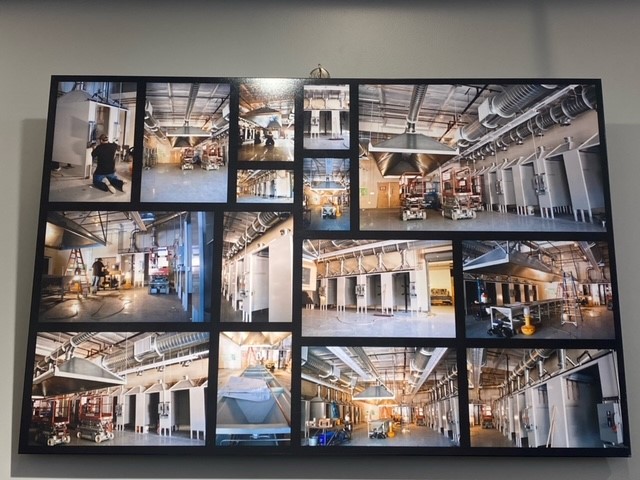
Top Left Panel- Welding Booth Photos
The welding booth photos shown depict the work stations being fabricated and installed at the San Leandro Training Center. Upon the closing of the facility in 2022, the welding booths were disconnected, upgraded with larger workstations and repurposed in the current Livermore facility. The ability to carry this part of our training history to a new facility is a testament to the quality of craftsmanship our members produce. The booths were constructed by Local 104 members and still meet the standards of a modern welding facility. Each booth is equipped with dual exhaust systems, to minimize the potential for smoke inhalation, and weld screens, which provide eye protection for spectators outside of the welding process.

Middle Left Panel- Certificate of Accreditation from the International Training Institute
American Welding Society (AWS)-accredited testing facilities meet the qualification and testing requirements of the industry and provide pathways to the certification process, which we provide our members through training.
These facilities can perform testing to any welding code, but the more common codes in the industry include AWS D1.1, AWS D9.1, AWS D1.3, ASME, AWS D1.2, and AWS D1.6. The certificate on display is from the training facility in San Leandro. The Livermore training facility also has been recognized by the ITI and AWS as an accredited testing facility.
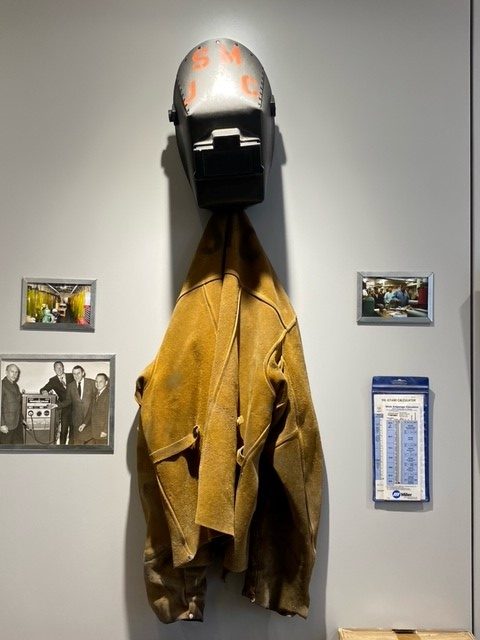
Right Panel: Personal Protective Equipment
Due to the hazards associated with the welding process, personal protective equipment is required to make sure the welder is free from bodily harm and injury. On display is an antique welding hood, which protected the welder’s eyes from the intense UV emissions of an electrical arc, and a leather jacket, which protected the welder from the heat associated with the welding process.
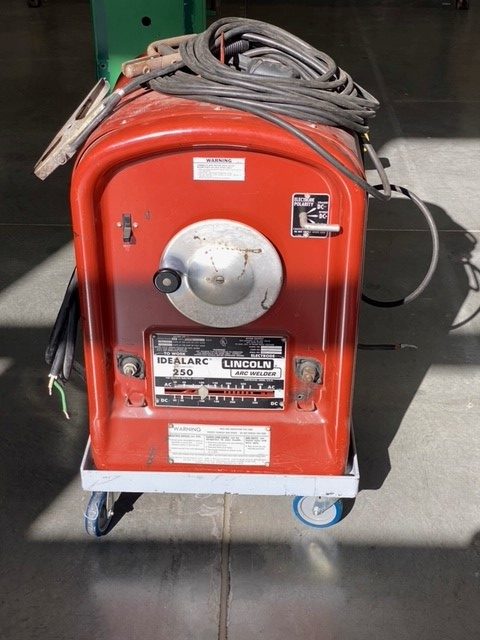
Center aisle entryway: Antique Crank Welder
Although welding technically is an ancient process, the process of arc welding wasn’t invented until the late 1800s. Using the arc welding process, a coalescence of metals is created through an electrical arc which generates intense heat and melts base and filler metals.
Industry training has evolved to include many facets of the welding and cutting processes. Processes such as shielded metal arc welding, gas metal arc welding, gas tungsten arc welding, plasma cutting, and laser welding are offered in sheet metal training.
Continue reading about the items on display in the Livermore history hallway