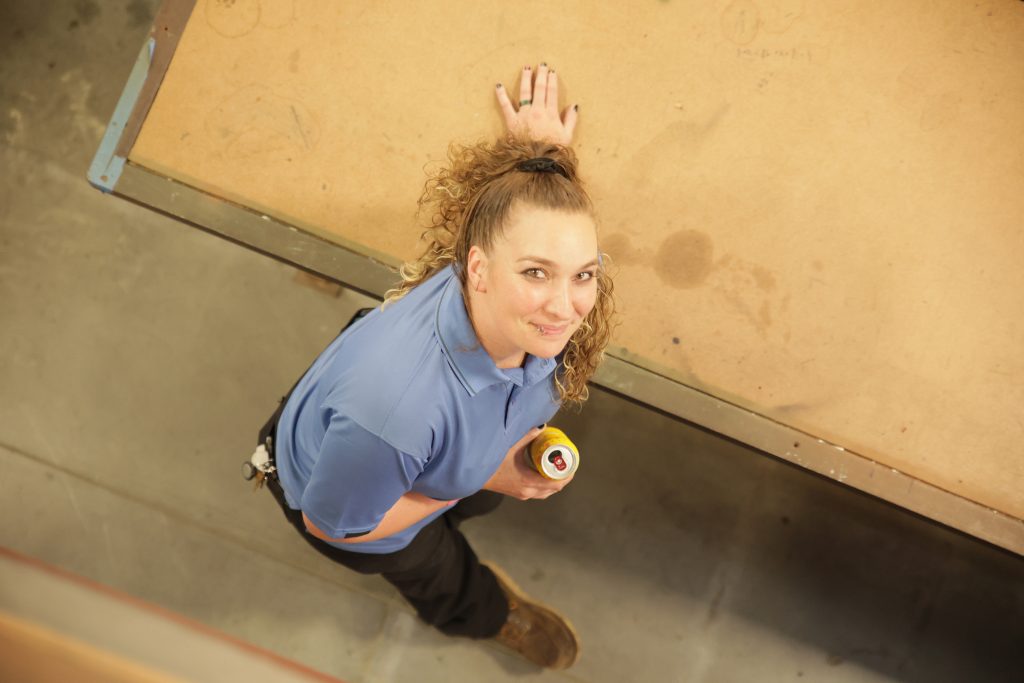
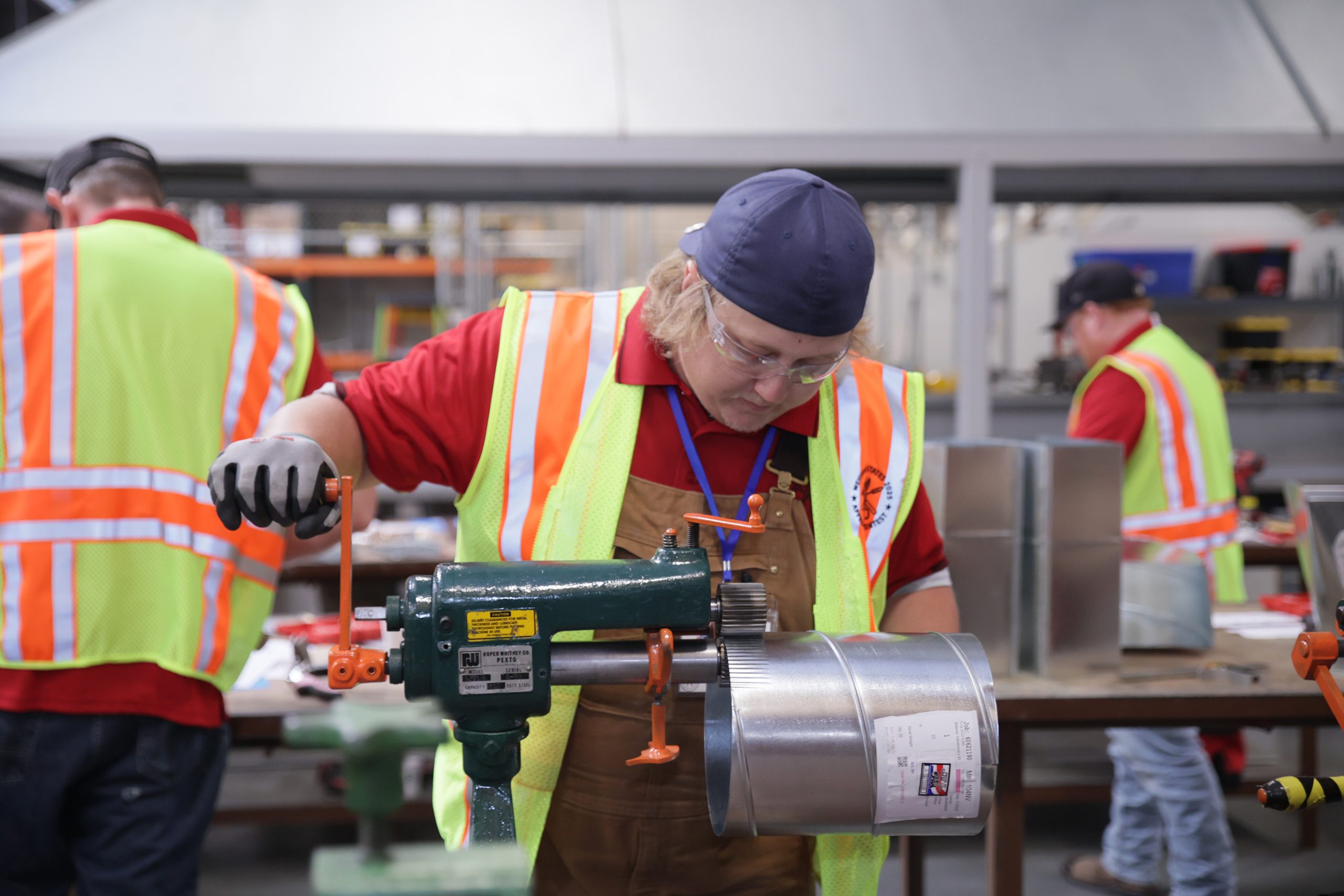
On July 17-19, Sheet Metal Workers’Local 104 and Bay Area Industry Training Fund hosted an apprenticeship contest at its Livermore, California, training center, inviting apprentices from the Western States Region, an area comprising California, Nevada, Arizona and Hawaii. This was the first such contest since 2011, and organizers expect it will become an annual event once more. Each JATC was permitted to send one competitor per 300 apprentices, and 16 hopeful apprentices arrived along with training coordinators and instructors representing Local 104, Local 105 in Southern California, Local 206 in San Diego, Local 359 in Phoenix, Arizona, and Local 26 in Sparks, Nevada.
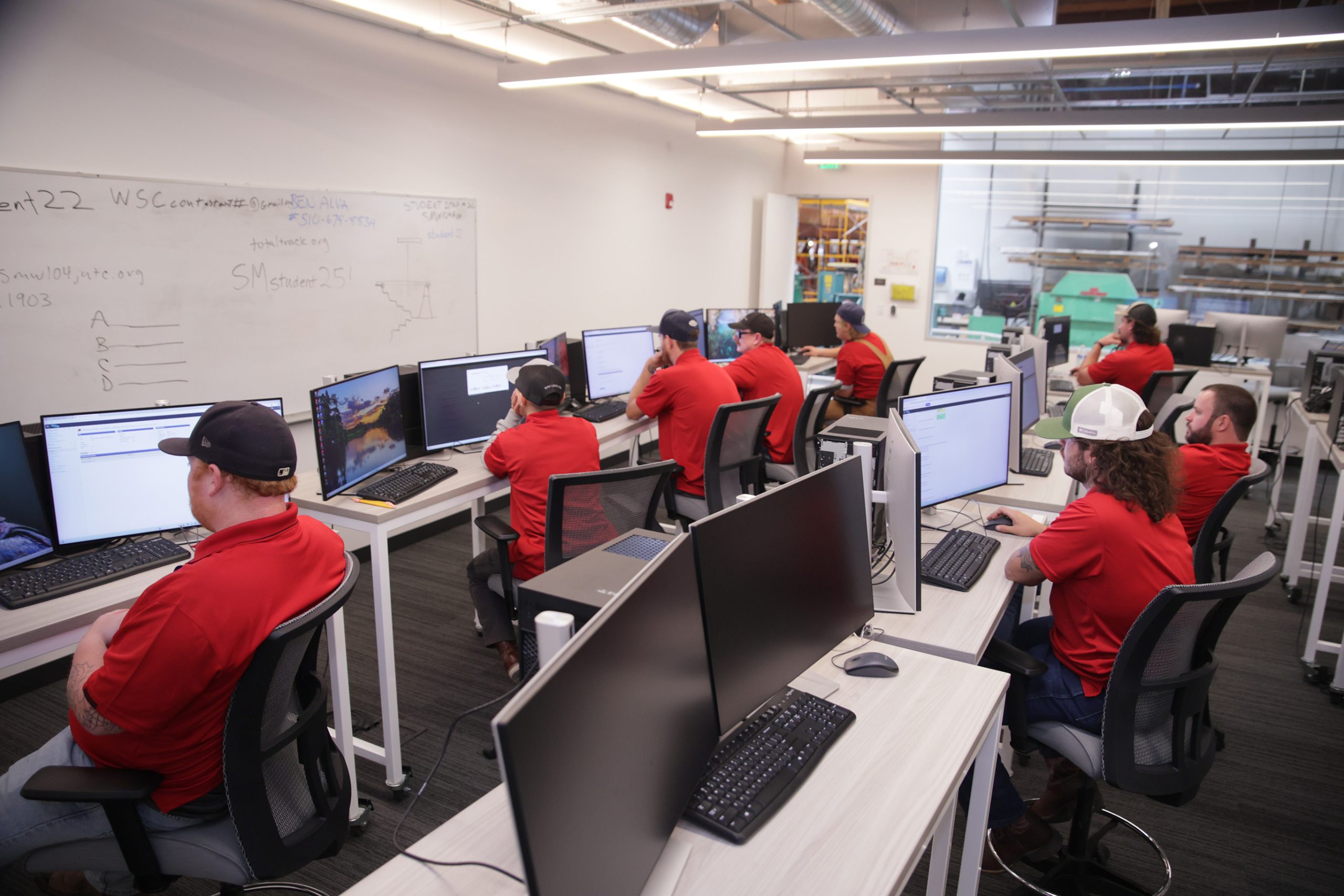
The competition projects were divided into four categories — architectural, project management, HVAC, and industrial/welding — with a fifth award for overall scores in all categories. The project management category was a new addition, the brain child of Tim Myres, administrator for Local 104 and Bay Area Industry Training Fund. This was the first-time project management had been included in any apprenticeship contest, anywhere.
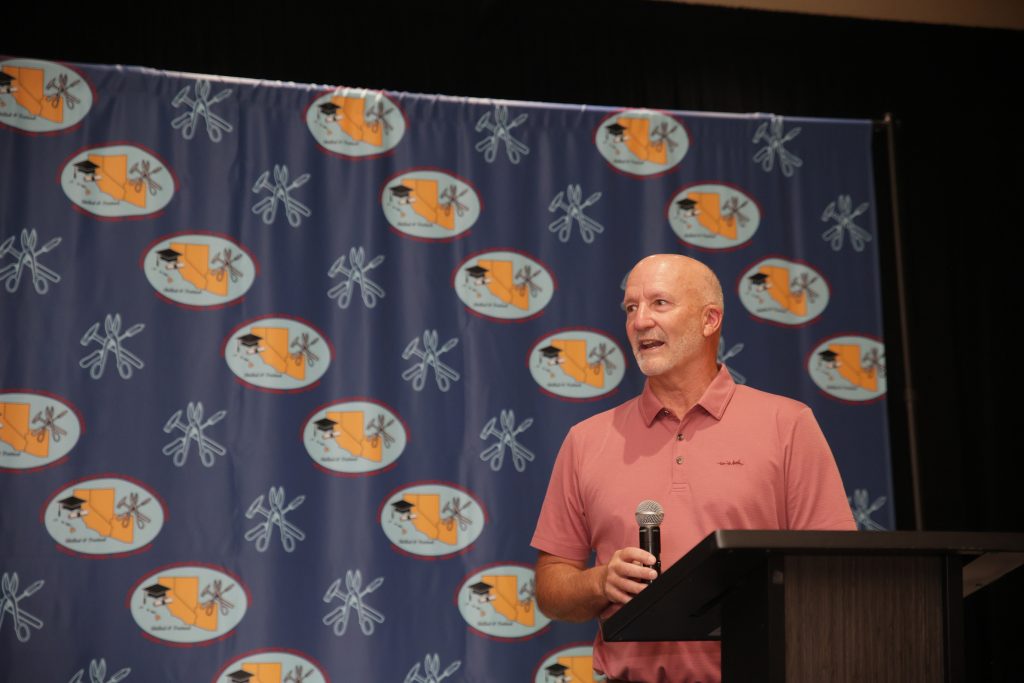
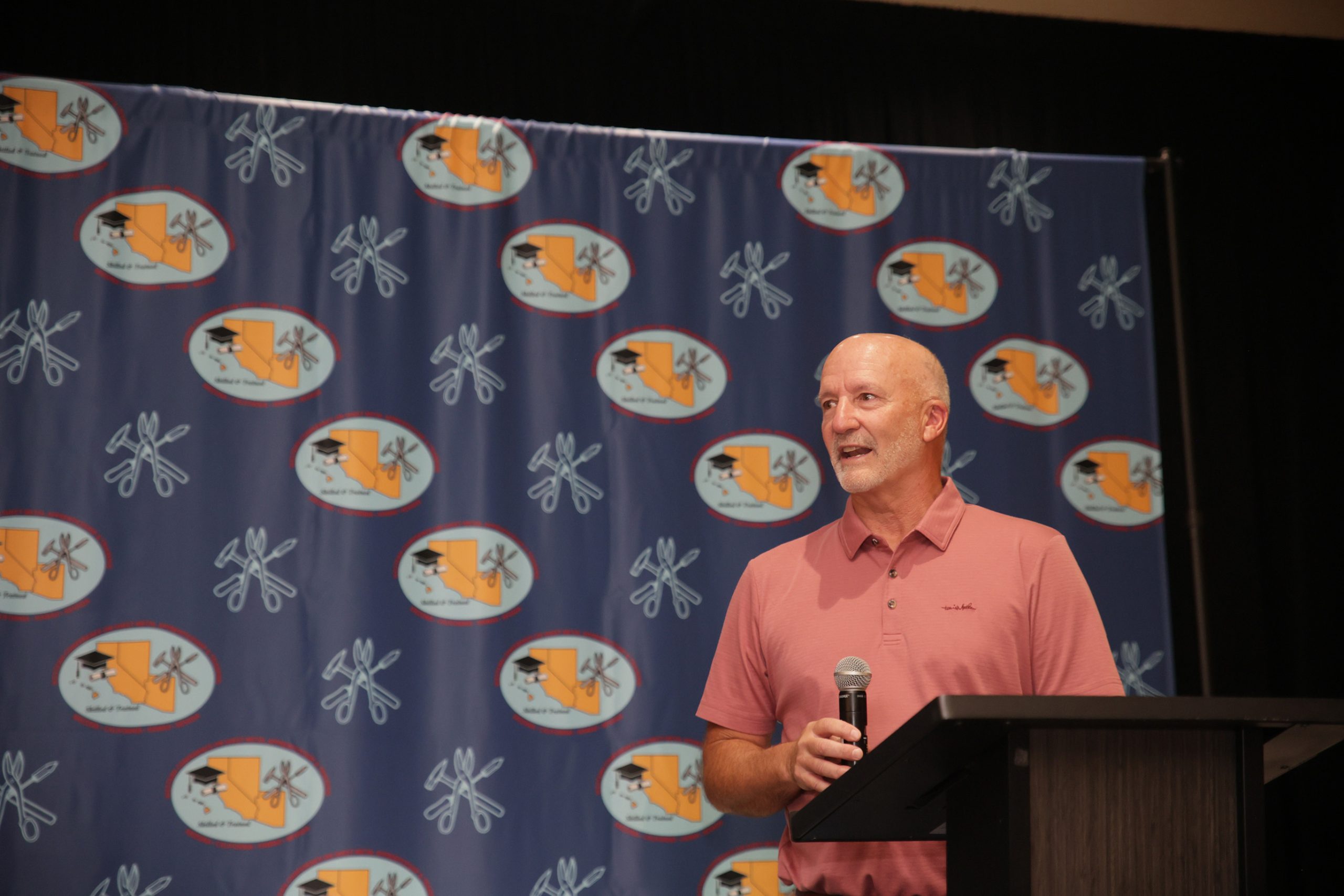
“It was hard, and made them critically think,” Myres said of the new category as he prepared to announce winners at the awards dinner Saturday night.
In the architectural category, Esteban Mercado, a third-year apprentice at Local 104, took first place, and there was a three-way tie for second place — Trevor Baker of Local 104, with Dillon Uhern and Richard Morrison, both of Local 105. Alex Giroux of Local 104 came in third.
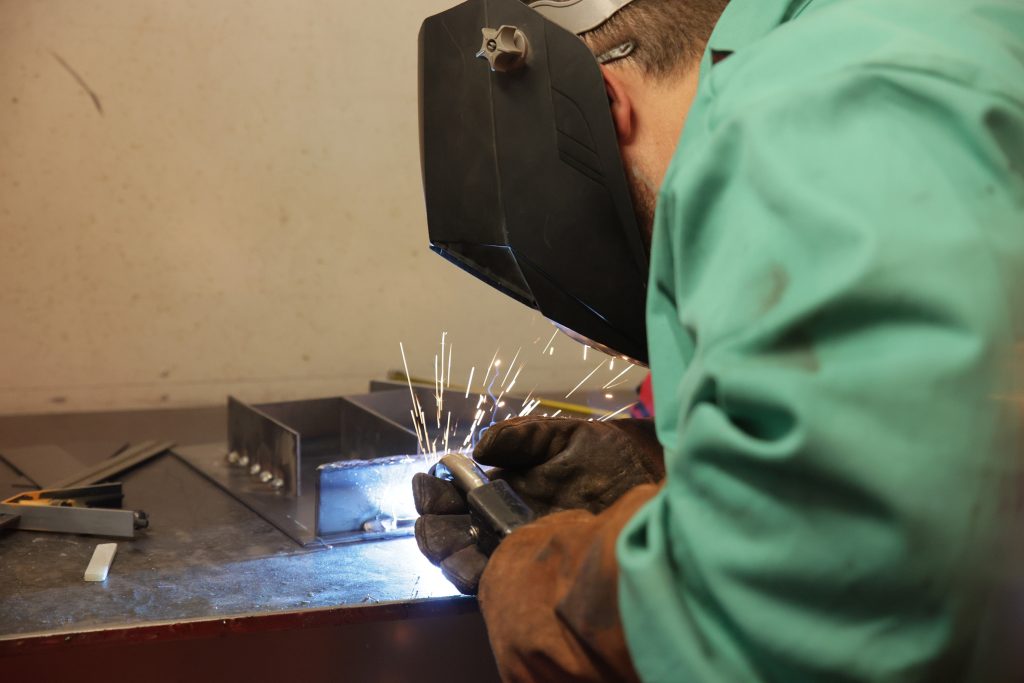
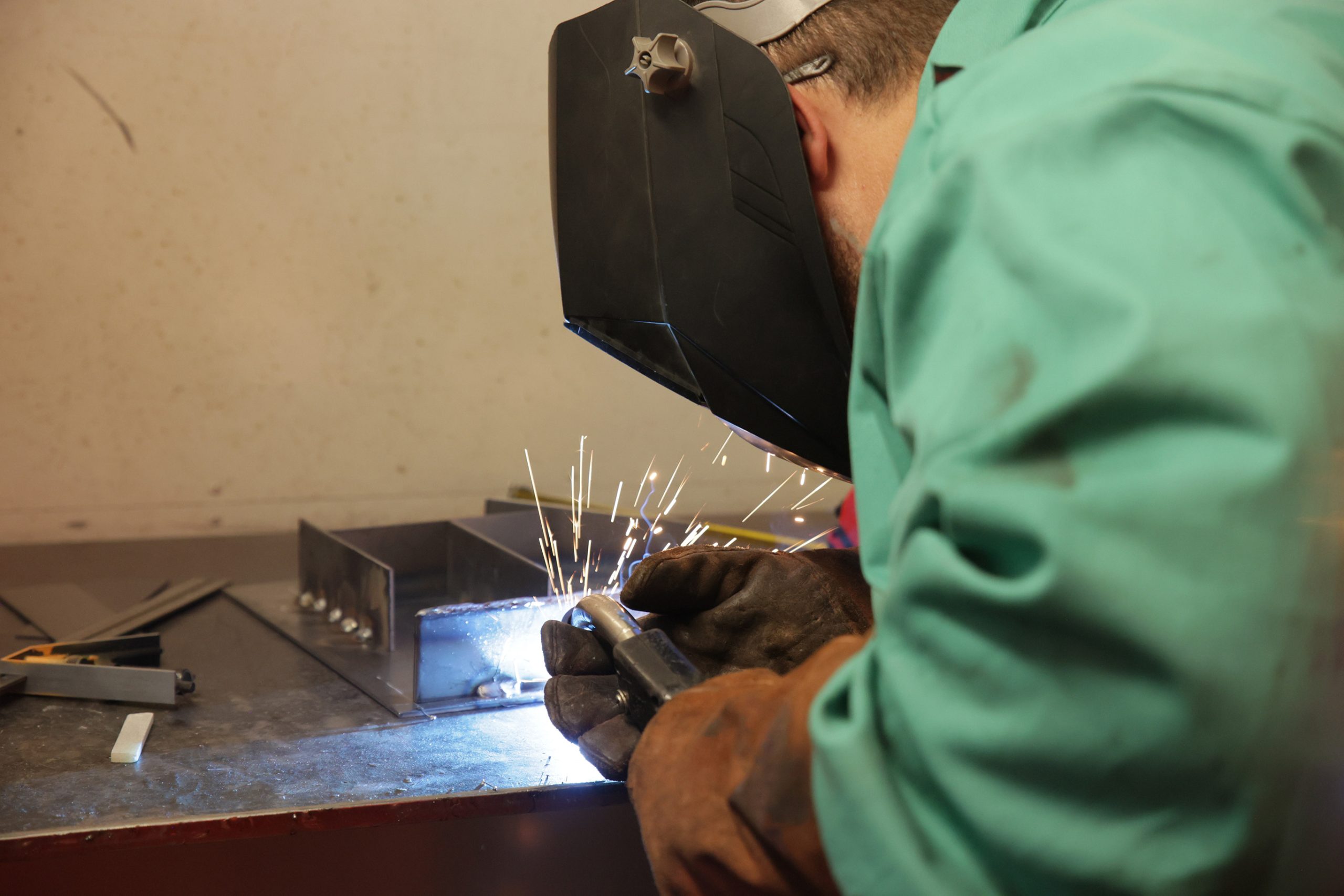
In the new project management category, Austin Cummings, a third-year apprentice at Local 105, placed first, with Giroux earning second place and Rebecca Suen of Local 104 placing third. In the HVAC category, there was a tie for first place, between Richard Morrison of Local 105 and Esteban Mercado, of Local 104. Trevor Baker of Local 104 took second, and Dillon Uhern of Local 104 came in third. For the industrial/welding category, Uhern took first place with Suen in second and Tristan Haynes of Local 104 in third place.
Scores from all categories were combined to award the overall winners, and the honor of first place overall went to Morrison, with Cummings in second place and Uhern in third. Accepting his win, Morrison, who is starting his fifth year in the program at Local 105, was humble and a bit surprised.
“Coming out of it, I thought I did all right but didn’t expect this,” he said. “I prayed a lot.”
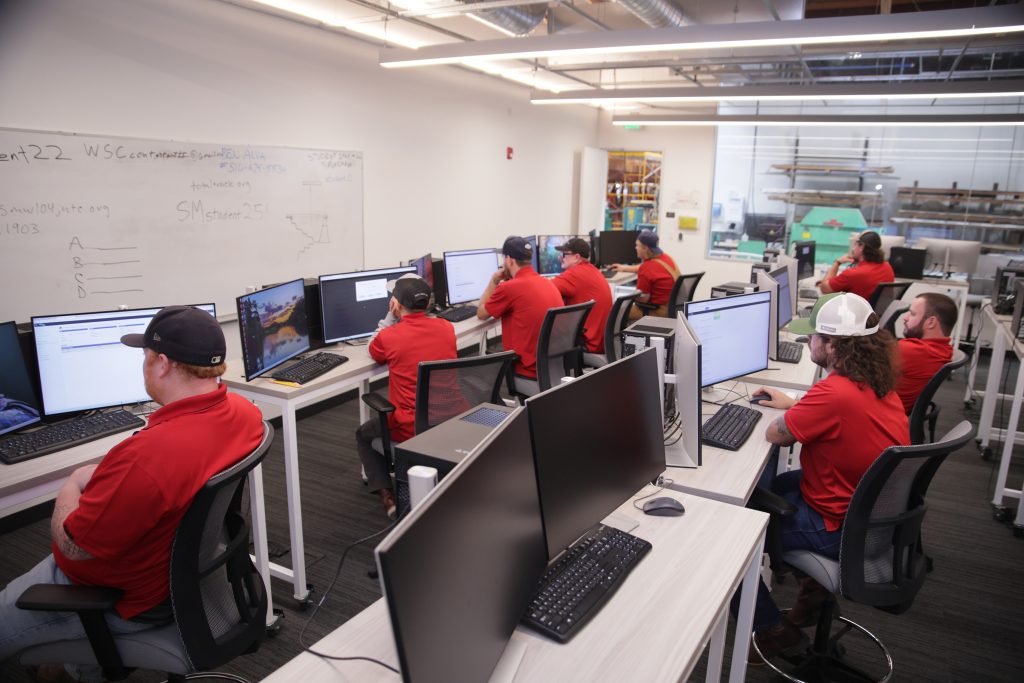
The contest had kicked off two nights earlier, on Thursday, July 17, with a welcome dinner and orientation at the Pleasanton Marriott. The competitors, all third- to fifth-year apprentices, received gift bags and red competition shirts, then Myres told everyone what to expect and reminded apprentices to breathe, and have fun. Each apprentice pulled a competition number at random from a metal bin, and they were sorted into two groups, determining their order of tasks over the two-day competition.
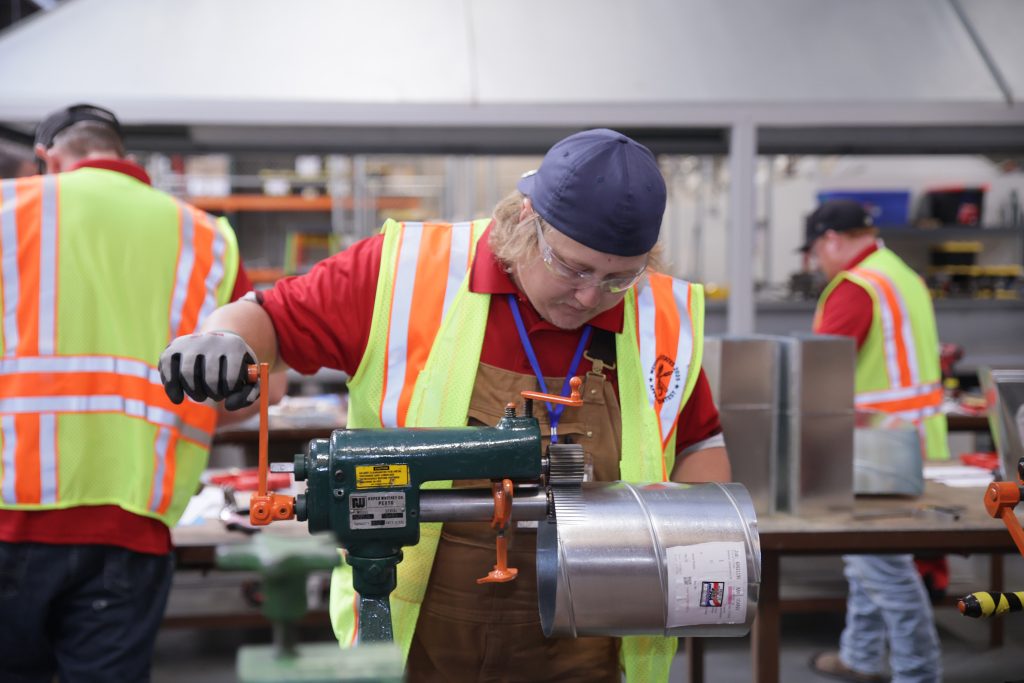
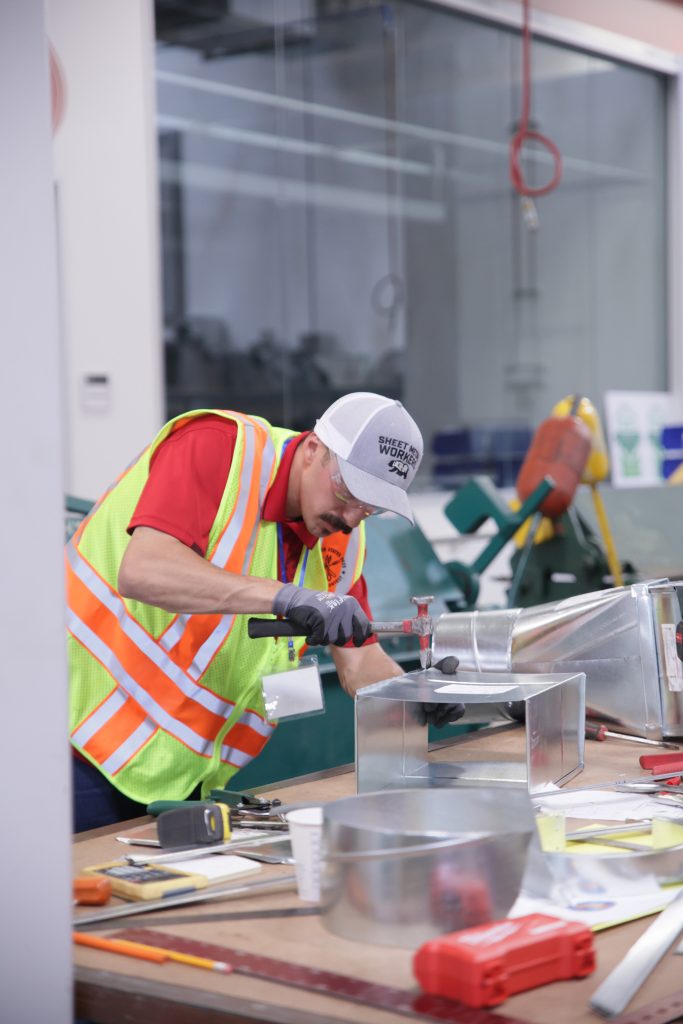
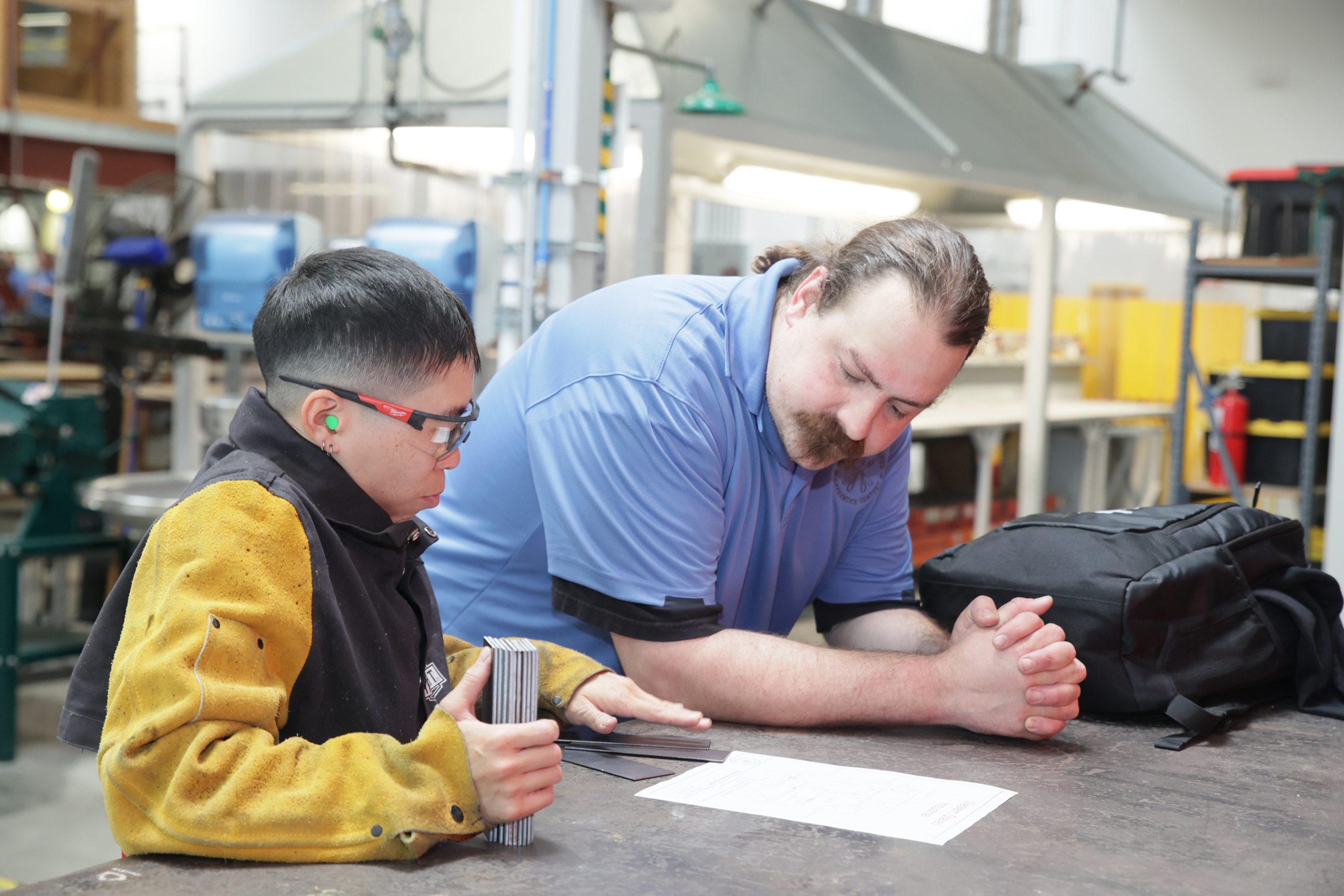
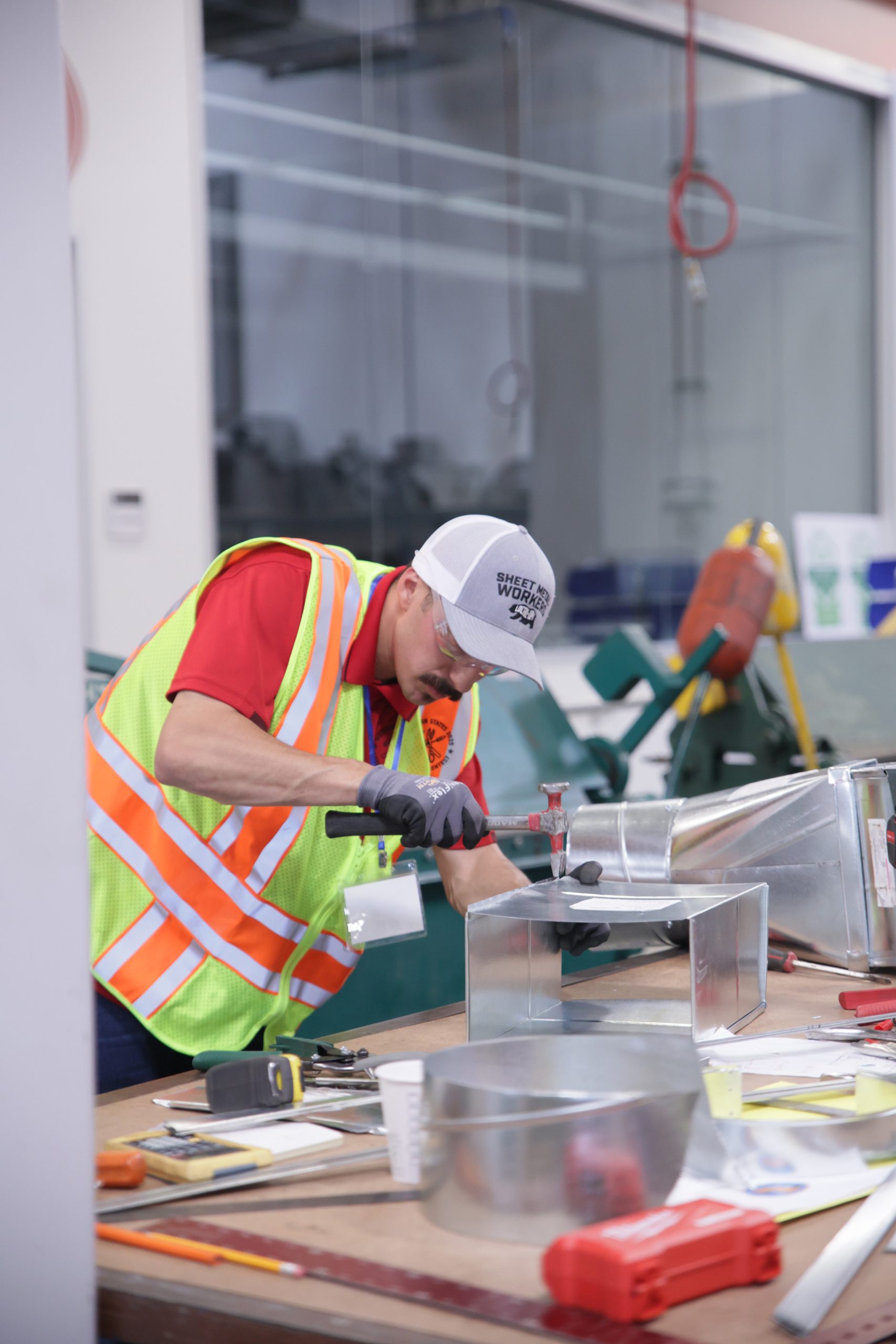
The days were full, with apprentices arriving at 7 a.m. Friday and 8 a.m. Saturday and working 10- or 11-hour days to complete all the tasks. From designing a gutter system to fabricating and installing a duct system to field verification and site measurement, apprentices worked side by side and took short breaks and ate lunch in a room together. That, too, was by design, said Myres. After finishing a project, apprentices would discuss it, find commonalities and discover new aspects of the trade as well as regional differences.
A repeating theme of this contest was instructors, coordinators and other leaders recalling their experiences at contests years ago and pointing out that apprentices who attend these events are the industry’s future leaders. And to become a leader, relationships and the ability to collaborate are almost as important as the skills. Some apprentices who said they weren’t normally very social noted that immediately after a test or project, it was impossible not to talk about it.
“Oh yeah, we definitely trauma bonded in that room,” Kasey Grierson, a fourth-year apprentice from Local 206 in San Diego, later joked.
Jason Ferguson, International Training Institute (ITI) region 4 field representative, was on hand to observe and support the event, and he appreciated the opportunity to immediately have face-to-face conversations with many coordinators and instructors. Prior to joining the ITI, Ferguson was a longtime training coordinator at Local 2 in Kansas City, Missouri. He recalled his time as a competing apprentice — he won first place internationally twice, as a fourth- and fifth-year apprentice in 2004 and 2005 — and said that the sense of accomplishment you feel as an instructor or coordinator, watching your apprentices succeed, is even greater than winning yourself.
“These apprentices are your future leaders, and today they’re getting to know others in the industry,” Ferguson said. “Intentional or not, they’re collaborating, they’re strengthening those relationships.”
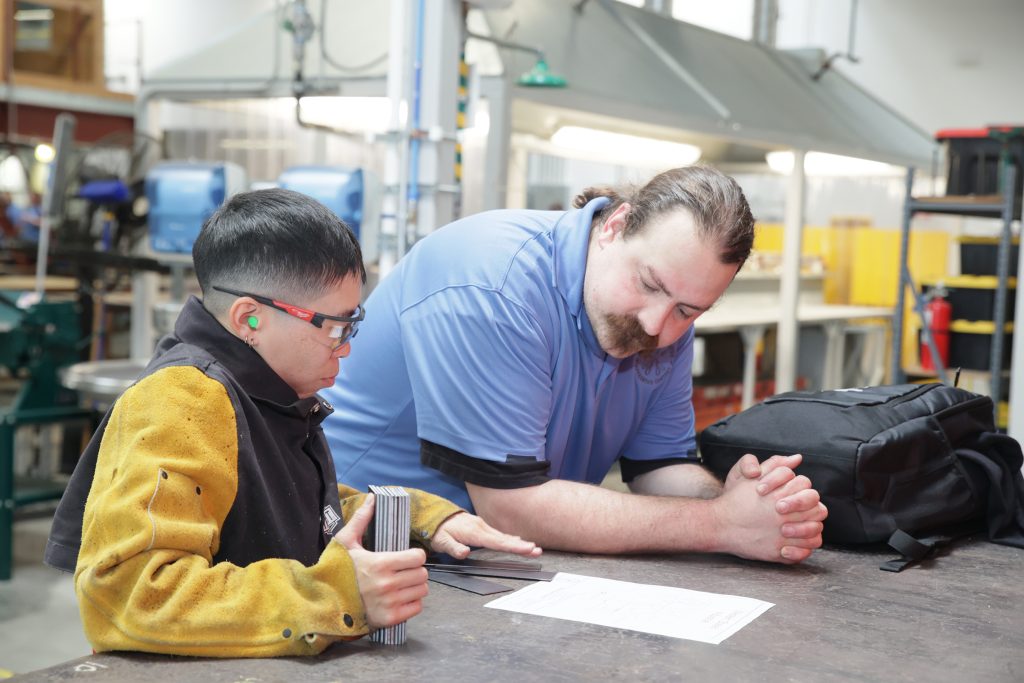
Training coordinator Nate Vennarucci and instructor Ben Alva, both from Local 104, put in the work to create and test the projects used in the contest, a process that began back in October 2024, when the contest was given a green light. They also served as lead judges, with Vennarucci explaining instructions before each task. Instructors and judges were not permitted to help, though contestants could get more materials or have questions answered in exchange for a points deduction.
The 30,000-square-foot Livermore training center, with its History Hallway, showcasing artifacts and information on the history of sheet metal training, and a two-story steel structure that emulates a job site, provided a perfect space for the apprentices and instructors.
“This is the Disneyland of sheet metal training centers,” said Benny Wilson, apprenticeship coordinator at Local 26 in Sparks, Nevada.
Wilson was interested in seeing what he could incorporate into the smaller local contests he holds back home. Tristan Sweeny, the competing apprentice from Local 26, said he was curious to test himself and see how he’d fare, as an apprentice from a four-year program at a smaller hall.
Instructors and coordinators made good use of the downtime as apprentices worked, and conversations started up in all corners of the training center about how things are done in different areas: everything from handling GI Bill benefits to how the apprentices for the contest were chosen to competency-based versus time-based training. With coordinators or instructors from 13 different JATCs representing five locals, there were many approaches to training. Some Local 104 training centers keep a “Coordinator’s List” akin to a “Dean’s List,” recognizing the top 10-15% of apprentices who also maintain perfect attendance, while Local 206 has an “apprentice of the month” that honors standout performers with a bag of tools and bragging rights.
Seeing what the tasks were, and how apprentices fared, also helped coordinators take a look at what they are training. Each JATC naturally will focus more on teaching the skills that are in demand for their region, and a contest like this gets people out of their silos.
“It definitely helps you plug any holes in your curriculum,” said David Fox, a full-time instructor at Local 206 in San Diego.
Myres was an ever-present force, walking quickly from the judges’ room to project areas to classrooms, keeping the contest running to schedule. While the event was not set up with spectators in mind, a few visitors floated in, including Phuong Tran, an apprenticeship programs coordinator at Foothill College who had used her sabbatical time to get to know the industry better by completing a pre-apprenticeship program in sheet metal with Local 104. Foothill College recently partnered with Local 104 to offer apprentices the opportunity to earn a tuition-free associate degree. Sheri Learmonth, one of Local 104’s trustees and a commissioner on the California Apprenticeship Council, also came to observe the apprentices in action.
Dion Abril, executive administrator of the Western States Council, was behind the scenes helping facilitate all the unseen necessary details, coordinating everything from catering to securing a projector for the banquet photo montage. After years with no regional contest, he recalled, this one came together thanks to an apprentice contest grant from the ITI, a generous donation of prizes from Milwaukee Tool and help from all over the region.
“It fell off the radar and then we had people retire,” Abril explained. “The idea was always out there to start up again, and finally Tim just said ‘OK, we’re doing it!’”
Milwaukee Tool territory manager Bridget Dunphy was on site both days of the competition, with the latest offerings displayed for apprentices and coordinators to see. She helped demonstrate the recently improved Milwaukee safety features, such as autostop and rapid stop, which protect sheet metal workers if a drill or grinder goes astray.
“Reducing injuries is how we stand out,” said Dunphy. “And we are happy to be here supporting these apprentices — they are working so hard.”
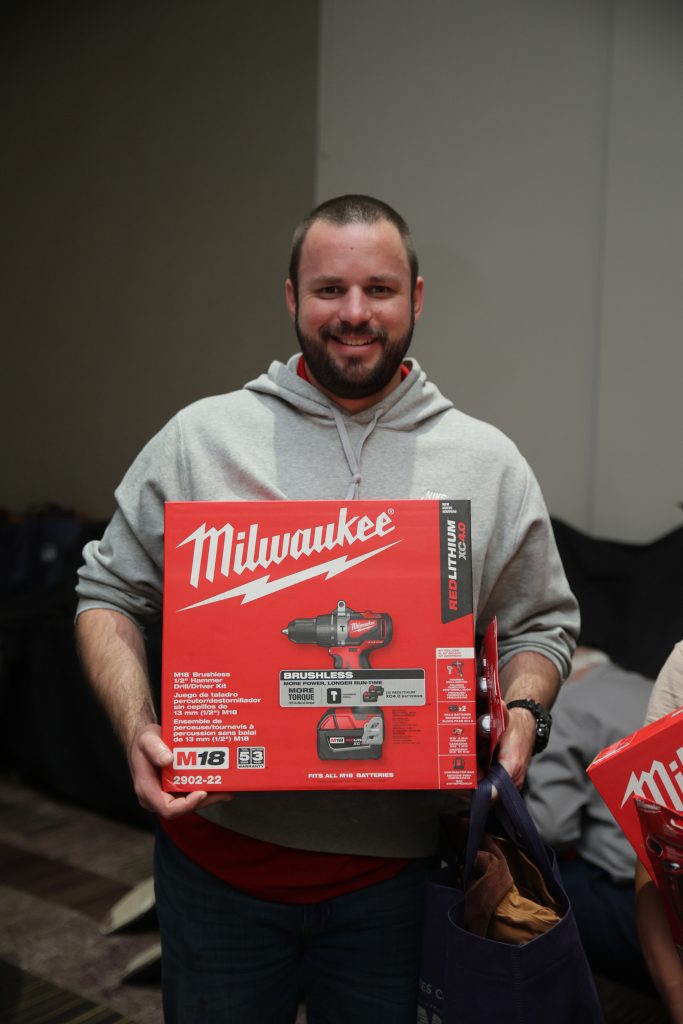
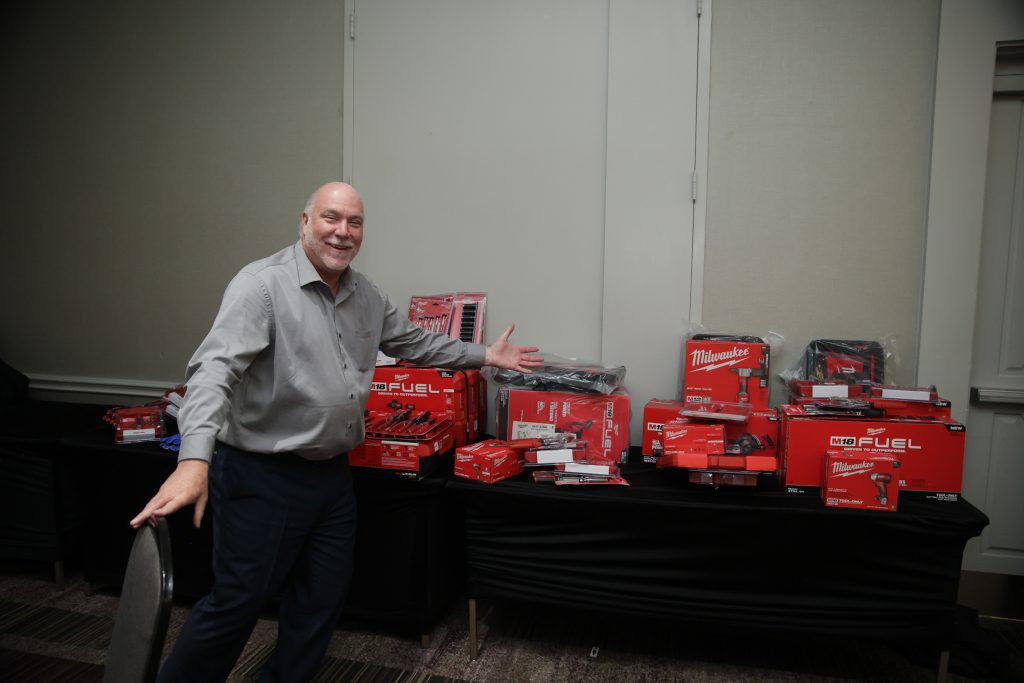
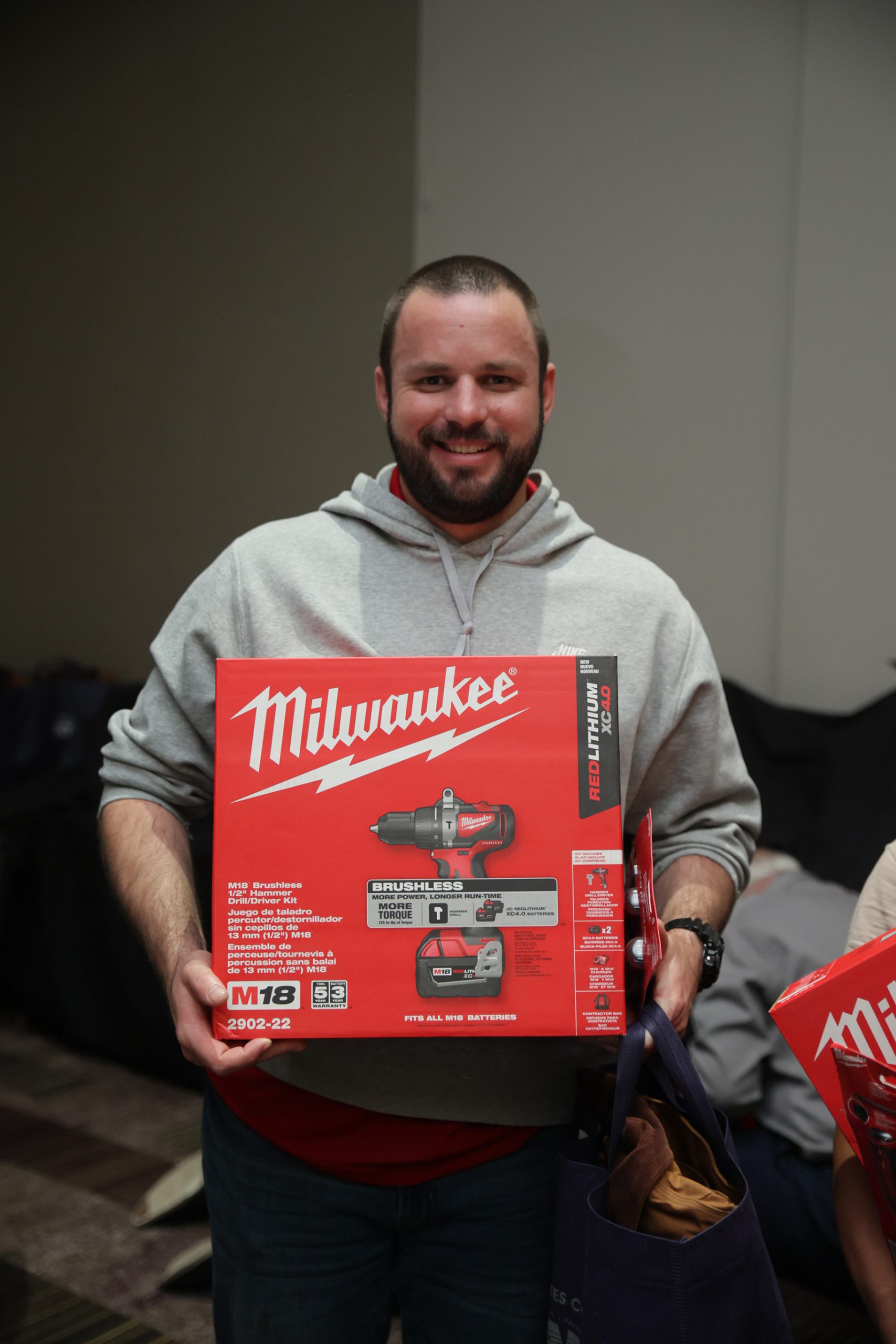
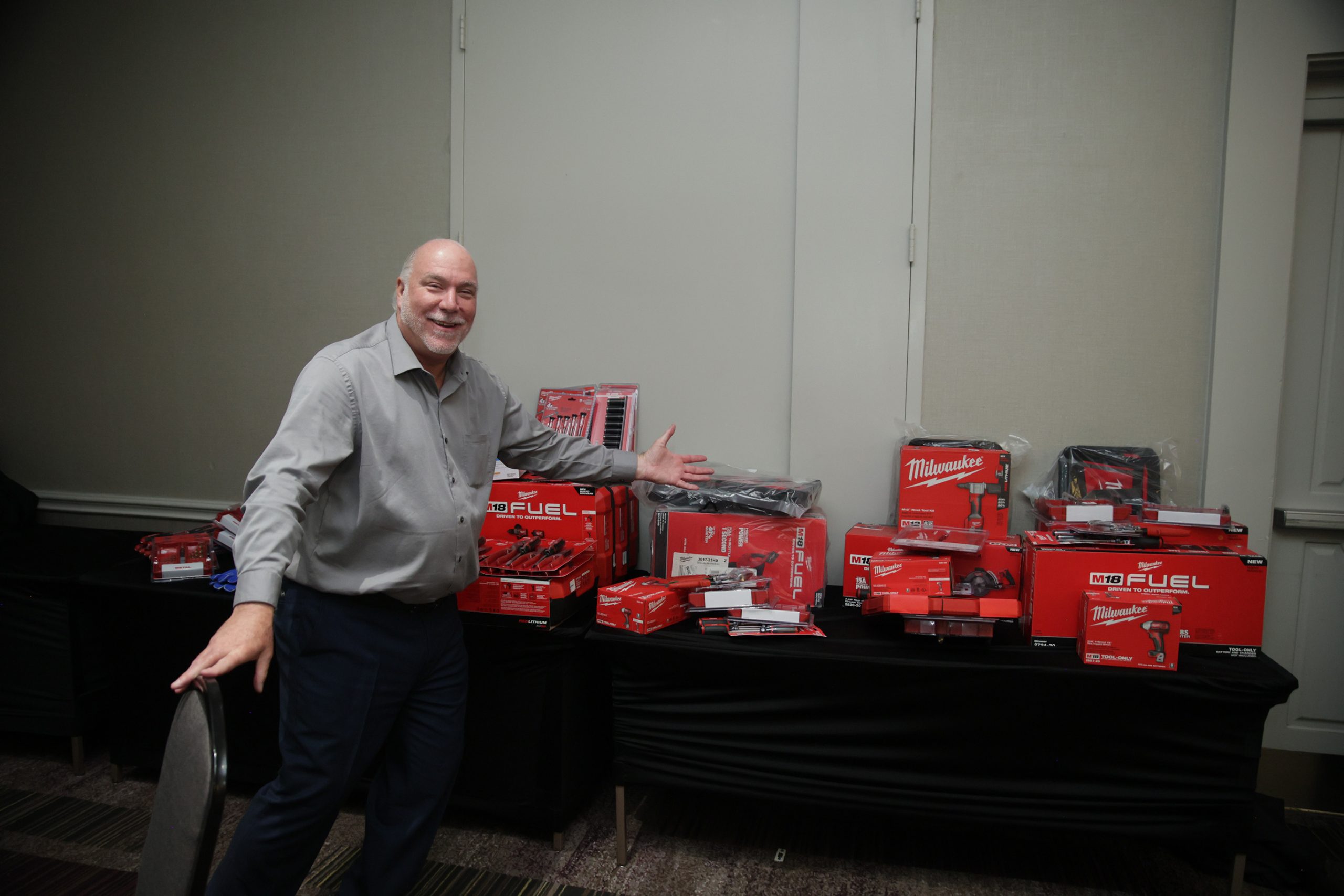
Milwaukee provided a M18 blower kit (worth about $400) for the overall first place winner, and four M18 fuel drill/impact combo kits (worth $350) for each category’s first place winners. Second place winners received a Milwaukee 5-piece hand tool kit (worth $120). These major prizes were in addition to many smaller Milwaukee tool prizes and the promotional items in each participant’s swag bag. Advanced Welding Supply provided gloves and a welding helmet, rounding out the prize tables.
Trevor Baker, from Local 104 North Bay Counties, said he came into the contest nervous, but felt reassured after speaking to Testing and Balancing Bureau (TABB) Hall of Famer Pat Pico, who was in attendance, and hearing about his experiences. Pico won his regional apprenticeship contest then was beaten at the international level by now-ITI Administrator Mike Harris — yet more proof that contests help forge the leaders of the future.
Competing in the regional contest was something apprentices could always put on their resume, it would make them an authority to other apprentices at their home locals with aspirations of competing, and it connected them to generations of other sheet metal workers who had done the same.
“The people who went and came back, whether or not they won, they come back and they become the pillars of their local sheet metal community,” added Fox, recalling former contests in his area.
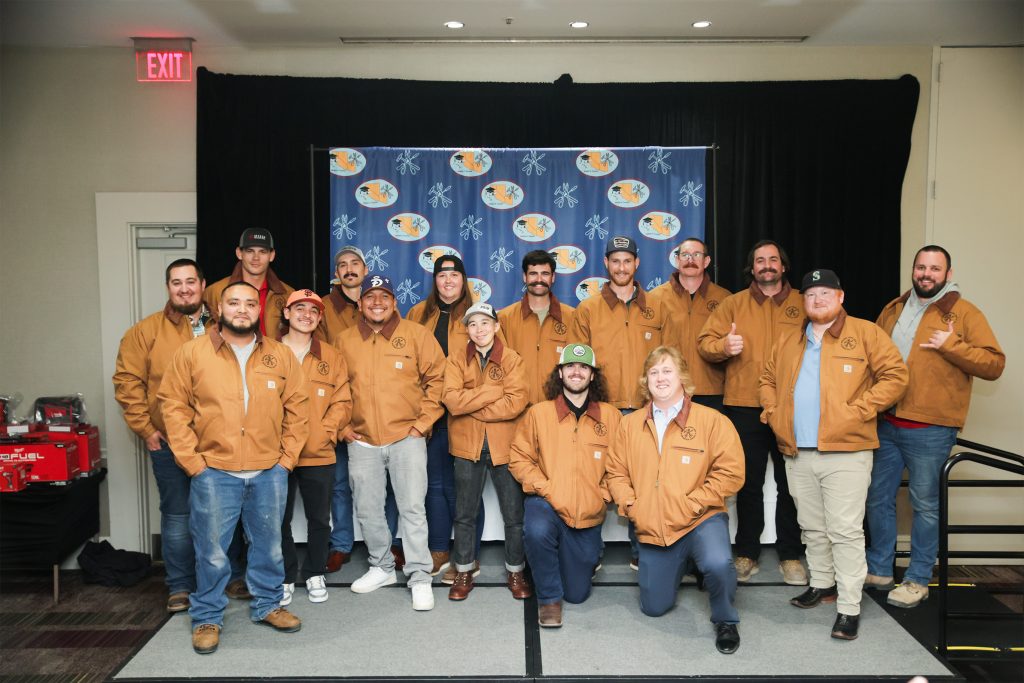
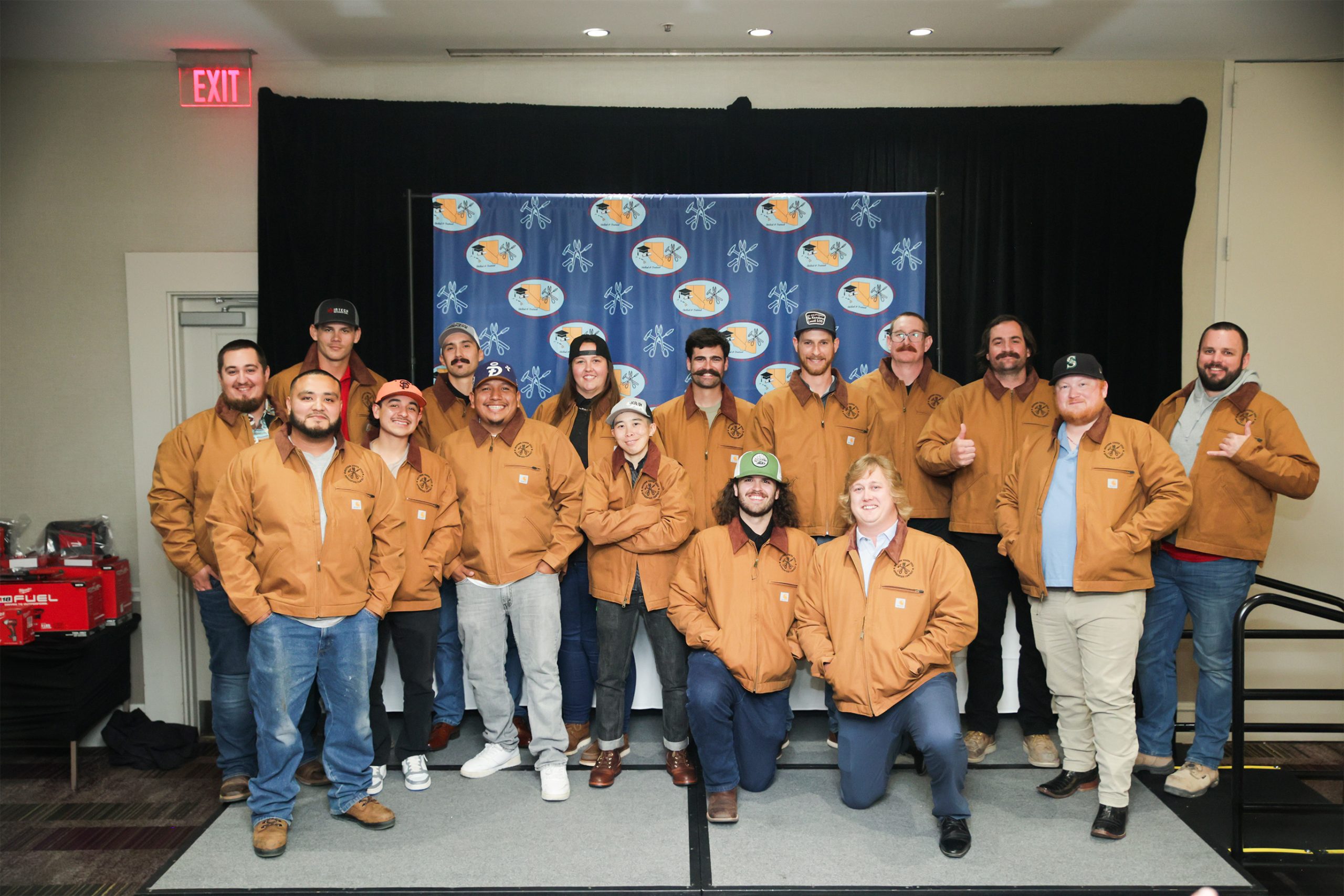
At the awards dinner, all apprentices were invited up for a group photo and received a Carhartt jacket branded with the Western States Contest logo, also meant to generate more interest as apprentices wear them at their home locals. Rick Werner, Local 104 president and business manager, reminded everyone there was not one single loser here, because everyone competed and learned.
There’s no word yet on where and when the next contest for Western States will happen, but Vennarucci and Myres are sure this will become an annual event again.
“So much went right, I’m really proud of our staff and Tim Myres, our administrator,” said Vennarucci. “I’d be happy to host again or help whoever ends up hosting next year.”