
Leading into the Livermore Training Facility is a long-standing history of sheet metal workers, training facilities, and organizations which contributed to the quality of craftsperson trained in the sheet metal industry.
Contractors signatory to the sheet metal union formed their own association, the Sheet Metal and Air Conditioning Contractors’ Association (SMACNA), which allows them to work together to promote the quality of union construction jobs and work with the International Association of Sheet Metal, Air, Rail and Transportation (SMART) workers to promote union craftsmanship. SMACNA has state, provincial, and local chapters as well as an international organization. The local contractors’ organization works jointly with the local union to support the apprenticeship program. SMACNA is made up of roughly 2,000 member companies internationally and throughout the United States.
SMART and SMACNA have long maintained a constructive and cooperative relationship. Both organizations champion the importance of working together for the welfare of the unionized sheet metal industry. They cooperate on joint committees that set standards and define the terminology and science of the trade, prepare technical papers on matters of common interest, and advocate on issues of mutual concern at the federal, state, and local level.
ON DISPLAY
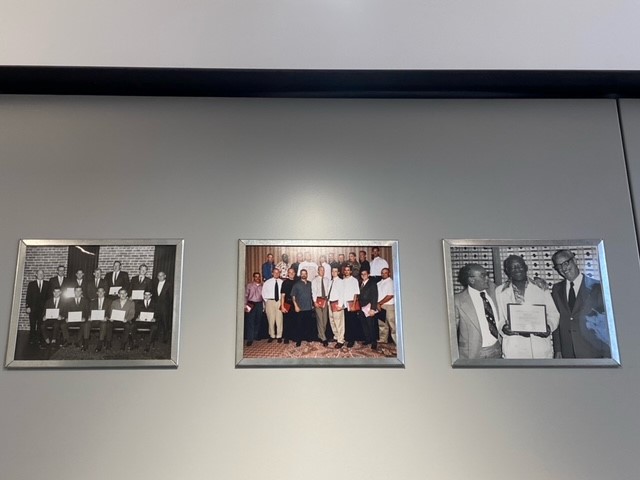
Top Left panel
Sheet metal workers who complete the requirements of the training program earn completion certificates.
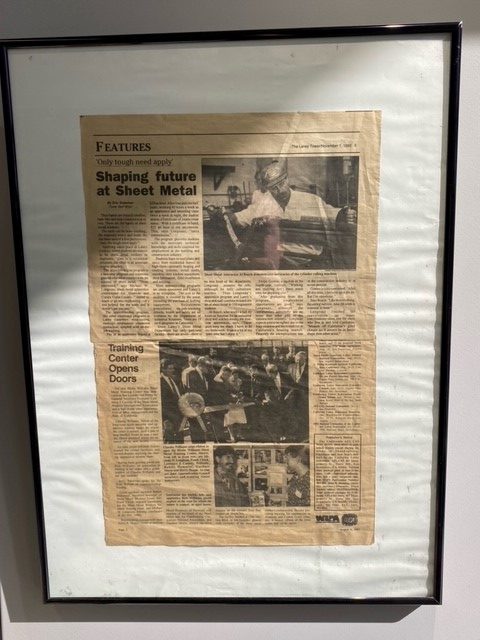
Middle left panel
On display is a copy of the Laney Times, copper bollards and original photo of the grand opening of the San Leandro training facility at 1700 Marina Blvd.
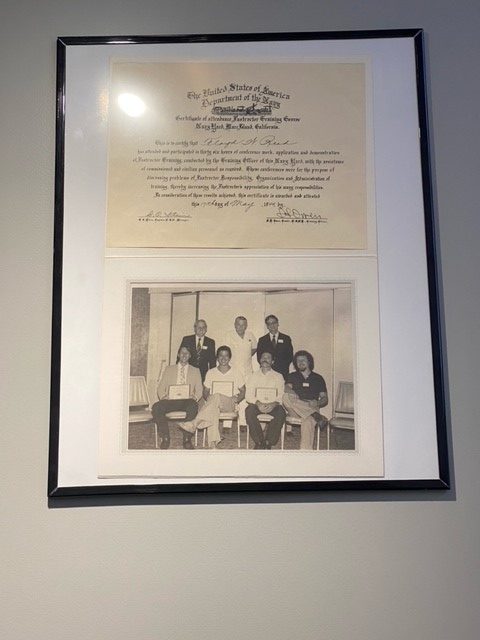
Top Right Panel
Instructors in 1944 receive certificates for completion of training to work in the shipyards. Ship building activities at union pipe and steel yards in San Francisco, and at Union Iron Works, during this time facilitated the needs of the war effort and employed working members of the Bay Area.

Middle Right panel
Apprentice record books were used to document on-the-job training hours. The training program has now updated to an all-digital system to report hours.
The books displayed range from the early 1900s to 1946 and include hand-drawn details for fitting layout and pattern development. Shown in relation is a modern layout and fabrication fitting book which members have access to today in digital form.
Continue reading about the items on display in the Livermore history hallway